Loading....
Close


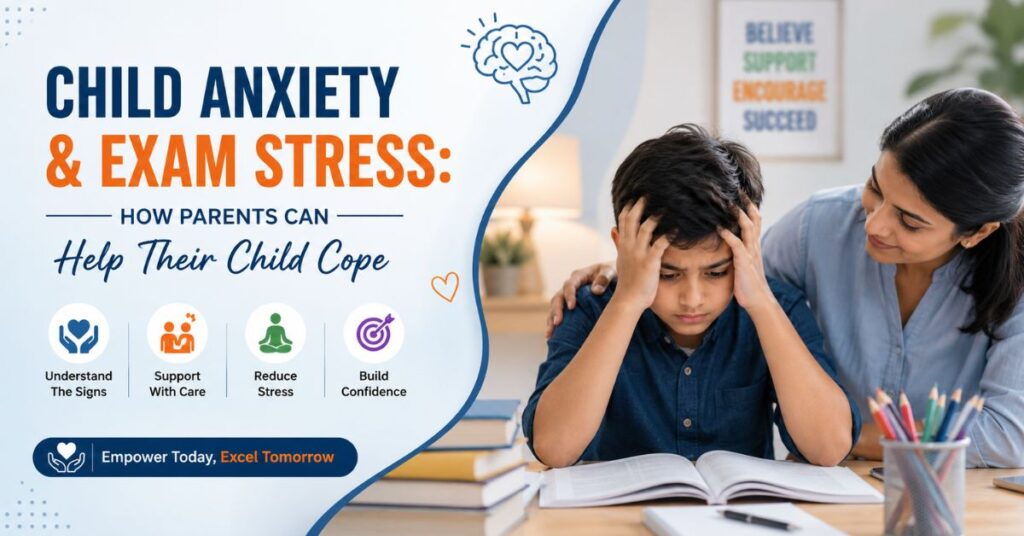
Exams are a way to evaluate a child’s progress. Hence, a certain amount of nervousness before a test is normal. However, if your little one suffers from severe child anxiety and exam stress to the point where they refuse to sit for a test, it calls for your attention.
Many children suffer from sleepless nights, stomach aches, irritability, and a fear of failure before an exam. This is not normal, and it can severely impact their physical health, mental health, and academic performance.
That’s why parents should identify the signs of child anxiety and exam stress early on and offer the right support to overcome them.
Your child’s way of coping with stress may not be the same as another’s. For example, some children openly express their worries, while others silently struggle. That’s why it’s necessary to recognise the signs of exam anxiety in children.
It allows parents to intervene immediately before it becomes overwhelming. Anxiety in school-age children often goes unnoticed until it begins affecting their overall well-being.
So, let’s go over a few behaviours that may indicate exam stress in children!
Children with exam stress often complain about frequent headaches, stomach aches, nausea, loss of appetite, sleeping problems, fatigue, palpitations, or excessive sweating.
If no other health condition or medical diagnosis explains them, these are surely signs of exam anxiety in children. Their bodies choose to react to the external stress in these ways.
Student mental health in India takes a severe hit when it comes to exam stress.
The symptoms often include excessive worrying about marks or failure, irritability or mood swings, crying frequently, avoiding studies altogether, loss of interest in hobbies, becoming unusually quiet or withdrawn, or seeking constant reassurance.
These are common school stress symptoms that parents should never ignore.
It’s obvious that exam stress in children will severely affect their academics. These signs can be noticed in their study behaviour.
They include difficulty concentrating, forgetting information during tests, procrastination, declining grades despite preparation, or refusal to attend school during exams.
Also Read: How to Reduce, Manage, and Overcome Stress and Anxiety During Exams
Unfortunately, there are several factors that contribute to the rise of anxiety in school-age children before exams.
Students often feel pressured to outperform their classmates, score better marks, and secure admission to prestigious institutions.
High expectations from parents, teachers, or even themselves can create an overwhelming fear of failure.
Children are constantly exposed to others’ achievements online. If they already feel pressured by their parents, this may further make them feel inadequate.
Many children believe their worth in front of their parents depends on their academic performance. This can cause intense stress during examinations.
Packed schedules with tuition classes and extracurricular commitments often leave little room for relaxation and recreation.
Also Read: How to Overcome Exam Fear and Focus on Studies?
The parents’ role in their child’s exam preparation is of utmost importance. It literally shapes their child’s attitude. However, despite good intentions, some actions may increase exam stress in children.
Statements like “Your cousin scored better” or “Your friend studies more than you” can damage confidence and increase stress.
When conversations revolve solely around grades, children may feel their value depends entirely on performance.
Children should understand that one examination does not determine their future. They must be taught that it’s more important to try and give their best no matter what.
Excessive coaching classes and unrealistic study hours can lead to burnout. It takes away their personal time for studying, resting, and pursuing hobbies.
Statements like “Everyone goes through this” or “It’s not a big deal” may make children feel misunderstood.
Also Read: Top Exam Preparation Tips: How to Prepare for Success
Parents definitely want to understand how to help their child with exam anxiety. Yet, they are unaware of the parents’ role in exam preparation for their child. The following strategies are supported by child psychology and educational research for managing test anxiety in kids:
Children often absorb the stress levels of the adults around them. That’s why the atmosphere at home significantly influences a child’s emotional state.
It’s highly recommended to reduce unnecessary pressure and maintain a positive and reassuring environment.
You will often notice that short and focused study sessions are generally more effective than long hours of continuous studying.
Hence, parents must help their child create a realistic study schedule with regular breaks. It refreshes their mind and strengthens their memory and understanding ability.
Children who do not get adequate sleep often experience higher levels of anxiety and perform poorly during exams. That’s because sleep is essential for memory, concentration, and emotional regulation. Hence, they should stick to a fixed schedule for waking up and going to bed.
Children may not always feel free to confide in you. That’s why you should regularly ask questions such as “What worries you most about this exam?” or “Is there anything I can do to help?”
It ensures that they can always ask for help. Moreover, listening without judgement helps children feel supported and understood.
The effects of meditation are real and effective. Hence, simple techniques like deep breathing exercises, gentle stretching, mindfulness activities, and guided relaxation practices can help children manage stress.
The body eventually learns to be calm even in anxious situations before exam season.
Also Read: Best Revision Techniques for Students: Top Exam Tips
You should always reward your child for their efforts. It is advised to praise their consistency, hard work, and improvement instead of only celebrating high marks. It helps children develop a growth mindset and reduces fear of failure.
Large portions of the syllabus can feel overwhelming. Instead, you can help them divide the study material into smaller, manageable tasks. It gives children a sense of control and accomplishment.
Exercise reduces stress hormones and improves mood. Even a short walk, playing outdoors, or a sports activity can significantly lower anxiety levels.
That’s why children are often encouraged to join a regular sports activity. It not only keeps their body active but also their brain functioning at its peak.
Children observe how adults deal with challenges. That’s why demonstrating calmness, resilience, and healthy coping strategies in front of them is important. It teaches children how to manage their own emotions during crisis situations.
Children should understand that exams are opportunities to learn and grow. It is not a measurement of their worth. This can be conveyed by offering reassurance. A supportive perspective reduces perfectionism and fear.
Also Read: Importance of Sports in School Education: Key Benefits for Students
The importance of child psychology in school should never be ignored because emotional well-being directly affects their learning and academic progress. Children learn best when they feel safe, supported, and emotionally secure.
That’s why schools should prioritise student mental health in India and create environments where they can develop resilience, confidence, and healthy coping mechanisms.
Also Read: How to Build a Growth Mindset in Students for Lifelong Success
It’s okay if parents sometimes fail to understand how to help a child with exam anxiety. In that case, they should not hesitate to seek professional help from a child psychologist or school counsellor.
As a matter of fact, early intervention can prevent anxiety from becoming a long-term mental health concern. Here are some severe signs of exam anxiety in children that may require professional help:
Also Read: What is the Importance of Discipline in Students’ Life?
Child anxiety during exam stress is a growing concern that deserves attention and compassion. Of course, examinations are important. But your child’s emotional health and self-confidence matter far more than a report card.
Hence, you must learn to identify any early signs of exam stress before they take a severe form. At the same time, you should create a supportive home environment, encourage healthy coping strategies, and offer reassurance.
JBM Global School firmly believes that academic success and emotional well-being go hand in hand. That’s why the school curriculum focuses on holistic development, student counselling support, and creating a culture where children feel safe, heard, and empowered to thrive. Learn about JBM’s student wellbeing & counselling support today. Contact now!
Ans: Common signs of exam anxiety in children include headaches, stomach aches, irritability, sleep problems, excessive worrying, difficulty concentrating, and avoidance of studies.
Ans: Parents can reduce exam stress in children by maintaining a positive environment, encouraging healthy routines, focusing on effort rather than marks, and listening to their child’s concerns.
Ans: A certain level of nervousness before a test is normal. However, severe anxiety in children that affects their daily functioning may require additional support.
Ans: You should consider professional help if your child’s anxiety is causing them panic attacks, school refusal, prolonged emotional distress, or significant behavioural changes.
Ans: Yes, definitely. Schools that provide counselling support, balanced expectations, and emotional well-being programmes can significantly reduce exam-related stress in children.